
Research at CLASSE
Photon Science
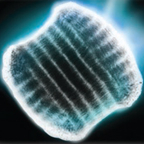 Photon Sciences encompasses R&D to create X-ray sources and instruments to explore our static and dynamic materials world. With over four decades of experience building particle accelerators for colliding-beam physics, faculty, staff and students are now optimizing the Cornell Electron Storage Ring for photon production and inventing cutting-edge technologies for a new X-ray source called Energy Recovery Linac (ERL). The ERL will be a final step upgrading the CHESS National X-ray Facility, where each year over a thousand scientists and students use a dozen X-ray stations for multidisciplinary research in Physics, Chemistry, Biology, Environmental and Materials Sciences, and Engineering.
Accelerator
Physics
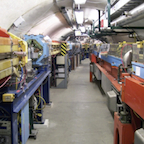 Particle accelerators provide us with the most powerful microscopes ever built, allowing scientists to probe nature from the microbiological scale all the way down to the fundamental building blocks of matter. Cornell University has long maintained active research in designing and building state of the art particle accelerators. Accelerator physics, the study of how to design, build, and operate these machines, is a field rich with non-linear dynamics, computational physics, engineering, and material sciences.
Particle Physics and Astrophysics
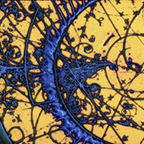 Particle physics and astrophysics at CLASSE aims to discover new phenomena in the largest and the smallest structures in the universe. Our particle physics (or high-energy physics — HEP) group has a long tradition of pursuing the deepest mysteries of the sub-atomic world by building experiments and analyzing data, as well as developing theories that explain and predict new physics. Several groups of faculty, staff and students work on the CMS experiment at the Large Hadron Collider, as well as the g-2 experiment and future experiments for Linear Colliders. Our newly formed particle astrophysics group is engaged in sub-millimeter measurements and analysis of the cosmic microwave background as well as detector development at the cutting edge of superconducting and optical techniques. The theoretical particle physics group conducts research on extensions of the Standard Model, string theory and cosmology, flavor physics, and lattice gauge theories.